Loading case study


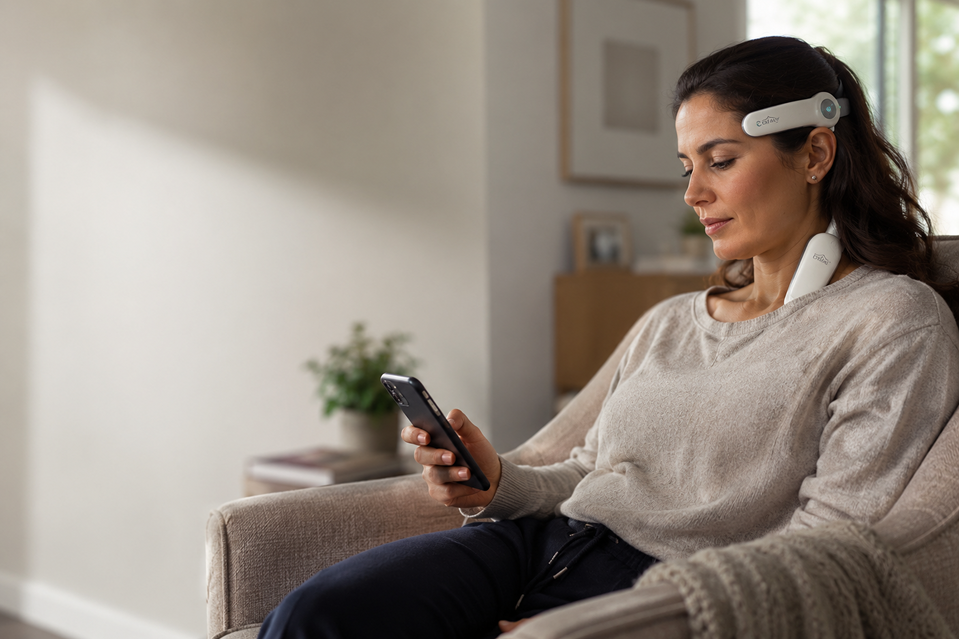
Re-engineering of the Bluetooth Low Energy architecture to improve persistent pairing and device synchronization
Redesign of the mobile UI/UX to create a simpler, more intuitive, pain-first user experience
Simplification of the onboarding flow to reduce friction and improve treatment initiation
Development of a pain-aware interface with dark mode, auto-dimming, high-contrast visuals, and simplified one-tap interactions
Integration of Augmented Reality guidance to help users place the device correctly during migraine attacks
Implementation of intelligent automation and quick-log features to reduce manual tracking effort
Integration with health data sources such as Apple Health, Google Health Connect, and wearable data platforms
Creation of personalized treatment sessions, smart reminders, and tailored migraine management tips
Development of physician-ready reports and trend analysis to track triggers, relief patterns, and therapy effectiveness
Support for offline-first treatment controls so critical therapy functions could work without internet dependency
Accessibility improvements aligned to WCAG 2.2 principles and secure handling of patient health data
Bring us the workflow, platform, or delivery problem that is slowing your team down.