Loading case study


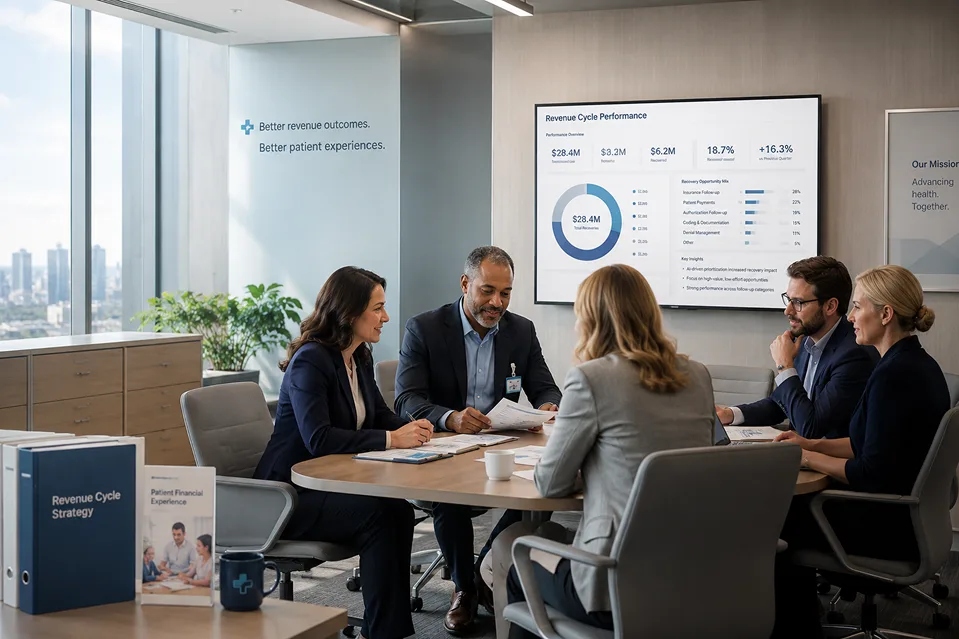
Our client is a multi-specialty healthcare provider that operates healthcare and allied service institutions across Maharashtra. The organization manages large volumes of patient billing, insurance claims, and receivables, requiring efficient revenue cycle management and timely payment recovery processes.
Technossus developed an Agentic AI-powered Revenue Intelligence Platform designed to automate collections, predict recovery outcomes, and recommend optimal intervention strategies.
Bring us the workflow, platform, or delivery problem that is slowing your team down.